How Kanye Lead Music To Its Current State by Jess Block-Gerber

It can be hard to see past Kanye’s celebrity to the leader within, but for decades he has been innovating and leading the charge in bringing rap forward both culturally and musically. Most of the recent sea changes in rap were spearheaded by Kanye and the way music is now advertised and released has directly changed because of his work.

quote-i-am-not-what-i-would-consider-truly-a-musician-i-am-an-inventor-i-am-an-innovator-kanye-west-119-25-23.jpgMUSIC

Similar to Miles Davis who spearheaded the Cool Jazz, Modal and Fusion movements of jazz, Kanye West has been changing the landscape of rap since his first album. As shown throughout Jean-Francois’s article, “He’s An Innovator: Why Kanye West Will Always Be Relevant” Kanye effectively ended gangster rap and popularized the more introspective rap that has become the norm, focusing more on money issues, personal relationships and daily struggles than the drug trade and violence against his enemies. He created a new market of rap fans who found his stories of day job drudgery and college anxiety relatable. Now this style has become commonplace. Of course, he was not satisfied to change the game only once and continued to find new ways to innovate. His next album brought in a full orchestra and he had famous composer and producer Jon Brion arrange live instrumentation fused with his own beats to create Late Registration, which brought a new chamber pop element into rap and this mix of live instrumentation and sampling can be seen in more recent albums like Kendrick Lamar’s To Pimp A Butterfly. His next album, Graduation, not only finished his disruption of gangster rap by outselling the face of it, but reached even larger audiences by embracing stadiums and anthemic songwriting(Genius, 2017).

Now that almost every big rapper sells out stadiums, it almost seems like it was always like this, but when Kanye made Graduation, stadiums were reserved for only the biggest rock stars and cultural sensations. After opening for U2 at one of their stadium shows, he found a market that hadn’t opened up yet for rap and made an album tailored for stadiums and massive crowds. Now rap is the prevalent musical culture and no one raises an eyebrow when they hear that Drake sold out Madison Square Garden. Speaking of Drake, another way Kanye is one of this age’s great leaders is his transformational leadership style.

kanye-west-swizz-beatz-studio-2016-2.jpeg

Kanye doesn’t just innovate on his own, he is always listening to the underground rap scenes, looking for people who he can work with and help propel into stardom. Drake and Kid Cudi were both influenced and propelled by their features and work with Kanye. “Fast-forward, and Cudi has now established his own genre. Ironically, this project served as the inspiration for the game’s next superstar to make his mark and take the torch from West himself”(Jean-Francois, 2016). He is consistently activating new leaders. His album 808’s and Heartbrakes created a new kind of electronic confessional subgenre of rap that is now dominating the charts with Drake and Future today. Nicki Minaj got her breakout verse on a Kanye track and since he started out as a producer, he always tried to help spread the names and popularity of his partners. Even now he is seen as the benchmark for collaboration and has sponsored and influenced the chicago music scene and continues to champion new artists. Rather than fighting against sea changes in rap, he embraces change and is always looking for new trends and voices. Of course, he wasn’t just influential in his music, but in the ways he marketed himself and changed how people sold their products in the internet era.


MARKETING and OUTREACH

Kanye understood how to sell himself to others and was more interested in finding a door to stick his foot into than just trying to get an album deal right out of the gate. As Eric Ruiz tracked in his article 3 Entrepreneurial Lessons to Learn From Kanye West, “He took the small chance of serving as an in-house producer and transformed it into the first step of realizing a successful rap career with enormous potential”(2016). He embraced the internet’s privacy breaching nature, turning personal tragedies into marketing tools. His first single, “Through The Wire” was performed after he got into a car crash and he famously recorded it while his jaw was wired shut, hence the title. Where he became a true leader was through his constant commentary on the culture. He was one of the first rappers to fight against homophobia in the rap community and pushed for his audience to actively be a part of the change they wanted to see. “‘Now I’m calling my business manager right now to see what is the biggest amount I can give, and just to imagine if I was down there….’ (Byrne, 2005). The hurricane victims need aid, West urges the public to provide aid, and he plans to provide aid himself as well”(Biedenharn, 2011).

As mentioned in the video, West advertised his music by making it a weekly event that was linked on his social media accounts. This turned his music into not just a normal release, but a social media event that brought his community into following him and other artists associated with it while building hype for his new project. The video above already covered a few of the people that have capitalized on this method, but more than anything else, Kanye’s surprise album releases completely changed the game for turning your album into a cultural event. There was no album cover, no real ads past his face being projected onto buildings with no context given for months.

kanye-west-1.jpg

Then, he announced it would be out in less than a month. To say this went against usual practices would be a massive understatement. Now, more and more artists take this approach whether to prevent leaks or to prevent their hype cycle from dying down, artists like Beyonce, Kendrick Lamar and even rock acts like King Gizzard and the Lizard Wizard are releasing music on their terms and every day could be the sudden release of a new album. Even this year, one of the newest growing groups, Brockhampton, has adopted this strategy, releasing their album Saturation normally, then in under a month dropping a second, even better album and have just yesterday as of posting this, announced a third to come in just over a week without any lead singles.

FINAL THOUGHTS

As I mentioned, it is easy to forget just how much this one man has changed the industry and the culture around him. He has activated other leaders, disrupted markets, increased rap’s audience and changed how artists market and release music. His contributions are too often taken for granted and he is written off as just a wannabe celebrity now. I’m sure even now, he’s probably cooking up something new, thinking how he’s going to change the game.

Annotated Bibliography

Ruiz, E. M. (2014, September 10). 3 Entrepreneurial Lessons to Learn From Kanye West. Retrieved November 07, 2017, from https://www.entrepreneur.com/article/237258

Jean-Francois, H. (2016, February 10). He’s An Innovator: Why The Kanye West Will Always Be Relevant. Retrieved November 07, 2017, from https://www.elitedaily.com/music/kanye-west-run-hip-hop/1371719

Biedenharn, I. M. (2011, May 5). Kanye West’s Use of the Diatribe: An Offensive “Scumbag” or A Modern-Day Cynic? Retrieved November 7, 2017, from https://dlib.bc.edu/islandora/object/bc-ir:102154/datastream/PDF/view

Genius. (2017, September 11). Retrieved December 01, 2017, from https://www.youtube.com/watch?v=YQYslaA1Lus

Complex News. (2015, August 25). Retrieved December 01, 2017, from https://www.youtube.com/watch?v=dVt7OjLcNcM

How Eminem Helped Evolve the Hip Hop Music Industry

By Drew Bartl

When Marshall Mathers, better known as Eminem, first took the scene in 1996 with his first album, the hip hop industry was a mainly African American influenced culture.  He was constantly told he wouldn’t succeed as a rapper because of his skin color, but as well look back at his rapping career he has set numerous records that will be unbroken for years to come.  For example, he was the first hip hop artist to sell over 1 million album copies within the first week, and he did this two times, back to back with “Marshall Mathers LP” and “The Eminem Show.”  Even today, Eminem is often referred to as one of the hip hop greats and even as the original white rapper.  Eminem brought the hip hop culture the white, middle American audience because he was someone they could relate and connect with because of his skin color.  Eminem’s influence also helped other artists because when he released an album, many other hip-hop artists saw increased sales.  This was because the white crowd Eminem brought to the industry would then explore to other artists newest content (Diverse Mentality, 2017).

Eminem as a Leader in Social Issues

Eminem hasn’t only stepped up in the music industry, but also has with recent social issues.  On October 10, 2017 at the BET Hip Hop Awards, Eminem ripped Donald Trump with an aggressive freestyle as a featured performance.  Many people supported him for taking a stand, but he also lost a lot of fans because of it (Kelley, 2017).  If you haven’t seen the video yet, I’ll leave a video below as a reference point.  A lot of hip hop artists have bashed Trump for his unusual presidential actions, but this time it was different because of Eminem’s skin color.  Kendrick Lamar is one example, but “when [he] blasts Trump, he is preaching to the choir.  When Eminem does it, there’s a good chance Trump voters are actually listening” (Weiss, 2017).

Again, Eminem’s white skin color allowed him to have a greater impact than other artists in the industry because of the whiter audience he attracts.  Being a white artist in a predominantly African American industry, Eminem has a unique advantage to being the one artist that brought the majority of white fans into the industry.  His music and influence is able to reach a crowd that other African American artists don’t have.  Therefore, his recent outburst has caused far greater impact and resulted in much more heated discussion on the topics he covers in the freestyle.  One ex-fan of Eminem had written online that “Eminem’s Trump Blast proves that he doesn’t make music for the masses, but for himself” (Karsen, 2017).  But should this really come as that much of a surprise? Eminem has always been outspoken on how he feels and not worried about the backlash he may receive.  He even has 21 million followers on Twitter, yet follows nobody himself because he “always [is] a leader, not a follower”

Controversy on Eminem’s Success as a Leader

Eminem’s impact on the hip hop industry can also be seen as a negative just as much as it can be seen as a positive.  Some people see Eminem’s takeover of hip hop has a negative because he is taking the spot light away from other artists who are just as gifted just because of his skin color.  Ryan Ford states that “the color of Eminem’s skin has given his career access to resources, opportunities and outlets that black rap artists who are just as gifted can only dream of” in his journal on Eminem’s impact on rap music (Ford, 2004).  Ford’s comments play the role of devil’s advocate by claiming that other African American artists lose out on potential fans because of Eminem’s skin color and hidden racial tendencies to favor him over them and not because of their rapping skill.  While I do see how this makes sense, I think because Eminem is white, he brings in fans that otherwise wouldn’t have come to the industry.  Without Eminem’s influence, the hip hop music industry may not be as popular as it is and may have stayed as more of a subculture.

Final Thoughts

To conclude, as usual Eminem’s rap career is particularly controversial. Whether you support him or not due to his recent outburst against the president, you cannot deny that he has at the very least affected the conversation.  His fan base and skin color in a predominantly African American industry has allowed his message to be heard and cause a larger impact that previous outbursts by other hip-hop artists.  While some people will say he used this skin color as a crutch in his rapping career, I say he used it to his benefit and to change the hip hop industry for the better by bringing it to other audiences that were previously untouched.

Citations:

Diverse Mentality. (2017, July 21). How Eminem Forever Changed The Music Industry. Retrieved December 04, 2017, from https://www.youtube.com/watch?v=OHdh0bbYrXE

Ford, R. (2004). Hip-hop white wash: The impact of Eminem on rap music and music industry economics. Socialism and Democracy, 18(2), 127-134. doi: 10.1080/08854300408428403

Karsen, S. (2017, October 12). Are Eminem’s Conservative Fans Ready to Accept That ‘Line in the Sand’? Not So Fast. Retrieved December 04, 2017, from https://www.billboard.com/articles/news/lifestyle/7998387/eminems-conservative-fans-not-ready-to-leave-him

Kelley, C. (2017, October 11). Trump-Supporting Eminem Fans Express Outrage on Twitter Over Rapper’s Anti-Trump Freestyle. Retrieved December 04,2017, from https://www.billboard.com/articles/news/politics/7997498/eminem-trump-freestyle-fan-supporters-twitter

Weiss, B. (2017, October 11). What Makes Eminem’s Anti-Trump Rap Different. Retrieved November 07, 2017, from https://www.nytimes.com/2017/10/11/opinion/what-makes-eminems-anti-trump-rap-different.html

Radiohead: Deviations and Innovations

by Kelly Allen

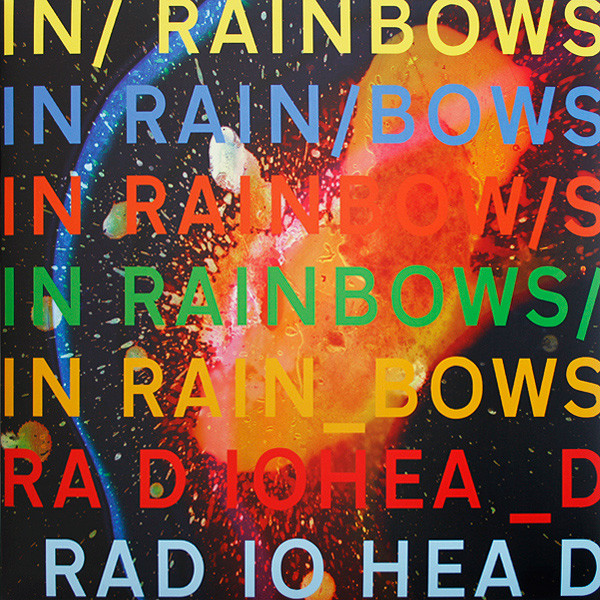
Radiohead, a popular rock band from England, is well-known for their music style, and famous song “Creep” released in 1992.  Their pioneering of different music styles in the rock genre influenced a generation of fans, but the music wasn’t the only thing that pioneered the music industry in a new direction.  In 2007, the release of their album In Rainbows was available for digital download on the band’s website.  The only difference being the fans could choose their own price.  The digital download was available long before any hard copies were sold in retail stores, and the concept of free music brought in more fans.  Radiohead’s music style and innovation through this marketing experiment intrigued fans, and made the band a perfect example of early digital leaders.

Radiohead’s Musical Deviations

“This mature period represents the fullest expression of Radiohead’s unique harmonic, formal, timbral and rhythmic idiolect, as well as its evolved instrumentation, centring on keyboard and electronics” (Osborn, 2017).  Before In Rainbows was released, people in the music industry noted Radiohead’s distinct tonal differences from other rock bands of the time.  They were inspired by early alternative rock, and certain stylings from hip hop, including the use of computers and synthesizers to generate sounds.  The band had shifted from a traditional rock sound to more of an electronic feel.  In an interview with Independent, Radiohead’s drummer Clive Deamer explains the new style of the band: “That is the most complex, antagonistic, tangled rhythm. It’s certainly not pop music, certainly not rock […] Those things do get mentioned. I don’t think they would call anything they do jazz. But they’re keenly aware that there are obvious parallels – in the way that they deliberately try to avoid cliché and standard forms for the sake of the song, and of Radiohead as an idea. Rock bands don’t do that. It’s far more like a jazz mentality. Jonny certainly, there’s a jazz player in there, along with all the other things” (independent.co.uk, 2012).  Radiohead’s use of digital and electronic equipment is an example of their leadership in the music industry and want for something different.

In Rainbows: A Record Label’s Nightmare

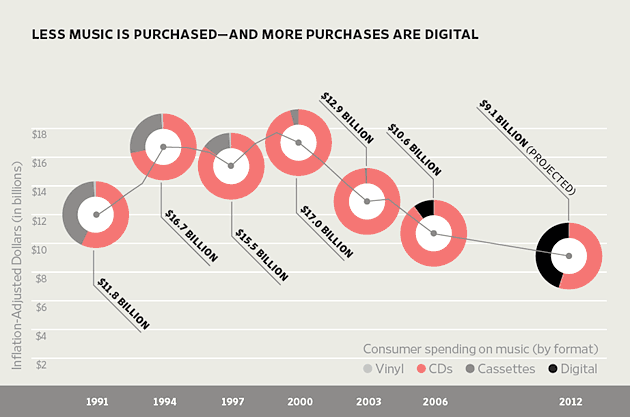
After a hiatus, Radiohead returned in 2007 with their album titled In Rainbows.  By using a “pay-what-you-want” business model, the band allowed fans to choose any price they liked for the digital download of their new album.  This release followed the ending of their contract with record company, EMI.  “For its first new release in four years, one of the world’s biggest bands would have no major-label representation” (npr.org, 2009).  The “Radiohead experiment” confused journalists, and was a hot topic of debate at the time.  Some loved it, writing articles and praising the band for not taking the corporate path to releasing music.  Others hated the band’s change of pace, saying that they had no idea how they could be making any kind of revenue.  “Interestingly enough, early data suggests that customers are paying comparable prices to what they would pay in stores or online […] This is great news for Radiohead, who doesn’t have to split revenue with distributors and the record label. Early estimates pegged the group’s first day take at around $10 million from sales of 1.2 million albums” (hbr.org, 2007).  Although the band offered this low-cost mechanism to receive the album, online piracy rocketed.  People were downloading the album for free off of third party, non-affiliated websites.  “The biggest-selling albums and songs are nearly always the most widely pirated, regardless of all the ‘anti-piracy’ tactics employed by music companies. Or, to sum up by paraphrasing an earlier argument, ‘popular music is popular everywhere it’s popular'” (npr.org, 2009). The band’s digital downloading generated a new pathway for music and artists everywhere.  The diagram below shows that people more often have been pirating music, but if music is purchased, it is done so digitally, which began in 2007 with the release of In Rainbows.

ff_bryne1_630

Although fans were allowed to download this digital content for free, there was a one dollar transaction fee, so the band was actually making some sort of profit from their website.

Free Music Ten Years Later

In conclusion, Radiohead is seen as a digital leader in the music industry for the use of the Internet to connect with their fans and further their careers and reputations.  Since In Rainbows was released, many bands followed in Radiohead’s footsteps, resulting in streaming services, such as Spotify, as the most popular way to access music digitally.  “Releasing a pay-what-you-wish album now is almost yawn-worthy. Major artists are experimenting with price points, novel distribution models and giveaways at a dizzying pace. But we aren’t any closer to knowing what works or what will become a consistent model for the future” (npr.org, 2009).  By using marketing skills that catered to what was popular among fans, the band was able to achieve more downloads and purchases digitally.  “According to Radiohead’s publisher, Warner Chappell, In Rainbows made more money before the album was physically released than the total sales for the band’s previous album, Hail to the Thief” (npr.org, 2009).  Currently, more artists, like Chance the Rapper, are also disconnecting from label companies and only digitally uploading their music to streaming sites themselves, personally connecting with fans in an informal setting and providing easy accessibility to their music.  It appears that artists are following in Radiohead’s footsteps, and truly deviating from normal expectations in the music industry.

References

Anthony, S. (2014, July 23). Radiohead’s Disruptive Innovation. Retrieved November 07, 2017, from https://hbr.org/2007/10/radioheads-disruptive-innovati

Byrne, D. (2007, December 18). David Byrne’s Survival Strategies for Emerging Artists – and Megastars. Retrieved December 01, 2017, from https://www.wired.com/2007/12/ff-byrne/

Garland, E. (2009, November 16). The ‘In Rainbows’ Experiment: Did It Work? Retrieved December 01, 2017, from https://www.npr.org/sections/monitormix/2009/11/the_in_rainbows_experiment_did.html

Hasted, N. (2012, April 11). How jazz secretly invaded pop music. Retrieved December 01, 2017, from https://www.independent.co.uk/arts-entertainment/music/features/how-jazz-secretly-invaded-pop-music-7630523.html

OSBORN, B. (2017). Rock Harmony Reconsidered: Tonal, Modal and Contrapuntal Voice-Leading Systems in Radiohead. Music Analysis, 36(1), 59-93. doi:10.1111/musa.12085

Kendrick Lamar, the Saving Grace of Conscious Rap

By: Korede Akinyelure 

DAMN.
Photo courtesy of Kendrick Lamar’s Instagram 

The Rose That Grew From Concrete

Kendrick Lamar, a 7-time Grammy Award Winning Artist that pushes the envelope with his candor on politics and the African American experience through his music and visual accompaniments. Was once the young boy referred to as Kendrick Lamar Duckworth hailing from Compton, California a city where the odds are stacked against its people, with a very heavy presence of gang influences. Despite Kendrick Lamar growing up in a city that was consumed by gang territory, Kendrick was greatly influenced by the arts and gangsta rap and his love for English. Kendrick was able to channel all of his thoughts and experiences through story telling in the Hip Hop Industry. Below is a video clip where Lamar speaks on Leadership and having influence on those that look up too him.

“It’s more than beats and rhymes, it’s actually something people can relate to” ~Kendrick Lamar 

Lamar has since been recognized by the City of Compton, by being presented with the Keys to the City back in February of 2016. An article by Brittny Mejia, for the Los Angeles Times highlighted the sentiments of well respected political figures on Lamar’s work. Further emphasizing the lasting impact that Kendrick has made on the City of Compton. As well as the symbol of positivity and possibility from dreams to come true for people in Compton (Mejia 2016).

“Kendrick Lamar is a phenomenal artist whose work has served as a
catalyst to raise a new level of consciousness for this generation,” said
Compton Mayor Aja Brown in a statement. “His message challenges the status quo and motivates listeners to rethink our society’s institutions.”

Hip Hop & The Youth

Kendrick Lamar’s second studio album ‘Good Kid, M.A.A.D City ‘ released on October 22, 2012 was an album that described the realities of what it was like to live in Compton, California. The album represents a coming of age for the youth that could relate to being influenced by their environments and growing up in a world that seemed to be against you. Kendrick was able to utilize his voice to speak up for those that could understand what it was or is like for them in present day to battle between the self and one’s environment. Bettina Love, explored Kendrick’s second album in article to discuss how Hip Hop influences the youth and impacts their thought processes.

Love states, “Hip Hop will be the soundtrack for youth as they use their bodies, skin tone, and physiognomy to commit to the publicness of protest, but if these good kids in mad cities do not love themselves and balance what is public and intimate, they will be constantly, restlessly resisting forever” (Love 323).

Lamar often refers back to the importance of the self and self-reflection in society. Specifically, in today’s society, African American people are being targeted heavily in America. Creating challenging times for African Americans and other people of culture to understand their place in today’s society. As a leader, Kendrick is consistently providing guidance through his music and crafting stories that are both uplifting and thought provoking in assessing one’s self. As well as maintaining one’s mindset, comfortability, and pride through self-reflection and understanding the world around them. Although, Kendrick’s line of work and talents fall within the Entertainment industry he remains consistent in discussing the importance of education in history and present day. He has nurtured his craft and his talents, while accepting the leadership responsibilities that he has openly embraced to address social, political, and cultural identities.

Collaborations to Strengthen Messages in Music

Beyoncé Knowles-Carter collaborated with Kendrick Lamar on a politically charged song aimed at addressing oppression and bringing awareness to the fact that although Slavery has been abolished. We are still dealing with modern day slavery and unjust incidents that we refuse to accept and be restricted by. At the 2016 BET Awards, Beyoncé and Kendrick Lamar performed “Freedom” which lasted about seven minutes and detailed the experience of oppression and how they refuse to accept anything less from complete freedom and how they will always rise above and continue to live. As leaders in the entertainment industry, Beyoncé and Kendrick Lamar used the opportunity that they had to perform in front of peers, fans alike, and the rest of America and people around the world to stand up for the rights of the oppressed. The power to influence millions of people worldwide and get them to listen to the message regardless of their ethnic and social cultural backgrounds represents true leadership. Through music and entertainment people can be united and gain better understandings of one another’s experiences.

“Freedom, Freedom, Where are You? Cause I need Freedom Too!” ~Beyoncé 

Unapologetic Thoughts while Remaining Humble  

On August 27, 2017, on live Television, Kendrick Lamar took to the stage at the MTV Video Music Awards to perform his single “DNA”. The track “DNA” begins with an audio sample featuring audio from Geraldo Rivera of Fox News, criticizing Kendrick’s 2015 performance at the BET Awards for its political message. Performing “DNA” at the Awards Show exhibited that Kendrick Lamar would not waver on his stance and beliefs that everything that makes him who he is as an African American man will not be ignored. He could not be muted or stopped by the comments of Rivera or any other critics because he is speaking his truth and bringing light to racism that still exists and has become a persistent topic in the injustices faced. Particularly, the killing of unarmed black men, boys, and women that have seen no justice in America’s court system. Cosigning the idea that black people are still regarded as less than despite the excuses given. “DNA” is a politically charged track that people of color greatly identify with because they understand that everything that encompasses their experiences and their skin are nothing to be apologetic for. Again, with this “DNA/ HUMBLE” mashup performances it was well received despite it being censored, the overall message transcends across all that saw and heard the highly visual performance.

DAMN the Execution

Kendrick Lamar’s career and leadership continues to thrive as he remains authentic in his story telling and ability to be a voice for he people. His latest album ‘DAMN’ confirms that Kendrick’s messages are being recognized across the culture of Hip Hop and beyond into all digital contexts. As ‘DAMN’ has earned Lamar his first certified Double Platinum Album. His passion and eloquence has throughout all of his albums and mixtape have remained consistent in shedding light on Hip Hop and the need for social advancement in present day and the future to come.  (Carmichael 2017).

“I always felt like God used me as a vessel, whether to share my flaws, my intellect, my pain…,” he said, making it clear that he views himself as a conduit for a message bigger than him. “[I’ve] always been a vessel. I can say the nastiest thing on record but I still feel like that’s [being] a vessel. You need to hear it. I can’t sugarcoat the reality” ~Kendrick Lamar


  —-

Citations:

Carmichael, R. (2017, April 21). Kendrick Lamar’s First Interview After Releasing ‘DAMN.’ Is a Doozy. Retrieved November 07, 2017, from https://www.npr.org/2017/04/21/525094661/kendrick-lamars-first-interview-after-releasing-damn-is-a-doozy

Essence Magazine. (2016, May 18). Kendrick Lamar on Leadership and Following Your Dreams|2016 Essence Festival. Retrieved November 16, 2017 from https://www.youtube.com/watch?time_continue=103&v=ie9e5BicNwQ

Kendrick Lamar Vevo. (2017, September 1). Kendrick Lamar- DNA. /Humble. (Live on MTV 2017 VMAS). Retrieved November 16, 2017 from https://www.youtube.com/watch?v=bhCfQ8BGow8&feature=player_embedded

Love, B. L (2016). Good Kids, Mad Cities. Cultural Studies/ Critical Methodologies, 16(3), 320-323. Doi:10. 1177/1532708616634837

Mejia, B. (2016, February 13). Kendrick Lamar, the Pride of Compton, Receives Key to the City Today. Retrieved November 07, 2017, from http://www.latimes.com/local/lanow/la-me-ln-kendrick-lamar-compton-key-to-the-city-20160213-story.html

Mitchell, J. (2015, March 26). Kendrick Lamar’s ‘To Pimp A Butterfly’ Proves A challenging Narrative is More Than Profitable. Retrieved November 12, 2017, from https://www.forbes.com/sites/julianmitchell/2015/03/26/kendrick-lamar-proves-a-challenging-narrative-is-more-than-profitable/#31fa1de61ca5

So Good. (2016, November 6). Beyoncé- Freedom live {lyrics}. Retrieved November 16, 2017 from https://www.youtube.com/watch?time_continue=1&v=5GrzftHFqgw


The Beyoncé Effect

By: Samantha Adoptante

Rise to Fame

It’s no surprise that Beyoncé is one of the most well-known and most successful artists in the music industry. She holds 22 Grammy Awards and is currently the most nominated woman in the history awards. She has also been named the most powerful female in the entertainment industry by Forbes magazine. It is evident that she has reached a summit in her career that compares to no other. She arrived on the music scene in the late 90s as the leader singer of the girl-group, Destiny’s Child. Quickly after the group’s creation, Destiny’s Child rose to fame becoming one of the world’s best-selling girl groups in history. Throughout the group’s 16-year reign, it became evident that Beyoncé stood apart from the others and when the group disbanded in 2006, she pursued a solo career. To many, in the early years of her solo career, she became bunched with other record-breaking pop stars in an already crowded field, but within the following years, something changed (Rosen, 2014).  She not only became a frontrunner in the music industry, but an inspiration and leader outside of it.

Beyoncé was only 16 when Destiny’s Child cracked the Top 5 on the Billboard Hot 100 in 1998. Even from then, many argue that her message and persona are the same and have carried on throughout her career and adulthood. “From the beginning her message has been professionalism, perfectionism, power—ideals exemplified in her fearsome live performances and dramatized in songs that view romance through the lens of finance” (Rosen, 2014). Power is an aspect that Beyoncé is especially keen on pushing, not only through herself but to her as fans as well.

GIRL POWER

BEYONCE-GIF-18-1

An avid promoter of girl power and ambition, Beyoncé has made several tracks and been vocal about being a modern-day feminist. Out of her lengthy discography, Beyoncé has produced many feminist anthems and it speaks to the consistent message and views she projects about being a strong, independent woman. She makes music that encourages girls to rise above and reach as high as humanly possible towards their goals. This is not only evident through her lyrics, but also through her persona and stage presence. She is hard hitting and fierce on stage all the while graceful, elegant, wise, and well-spoken in public appearances. She has gained the title of “Queen Bey” by her fandom, the Beehive, which is notable for representing one of the most passionate, die-hard fanbases in the entertainment industry. “Her songs can be read as mini-lectures in feminist theory and methodology—she has introduced feminism to new generations of young women and given feminists the world over an opportunity to rally behind a woman who is perhaps the world’s biggest popstar (Trier-Bieniek, 2016).

B-Real-Beyonce-We-Can-Do-It

Marketing to women by championing feminist ideals have been more and more popular over the years (Fineman, 2014). Beyoncé publically embraced being a feminist in 2013 with her song “****Flawless” in which she used excerpts from Chimamanda Ngozi Adichie’s “We should all be feminists” TED talk.

With the release of this song, Beyoncé further boasts on powerful sets of contradictions in her music that presents a new ideal of what feminism is. Consider her song, “Single Ladies,” a song that pushes feminist solidarity, endorsing a diamonds-are-a-girl’s-best-friend brand of transactional romance (Rosen, 2014). Or “Run the World (Girls) which was released in 2011. A song that includes the lyrics “We’re smart enough to make these millions/Strong enough to bear the children/Then get back to business.” Her musical impact has garnered so much attention and crossed over to a realm that emphasizes much more than the lyrics that there is even a class at Rutgers University called “Politcizing Beyoncé.” She has completely changed the meaning of what it means to be a feminist and role model for young girls.

Beyonce-We-have-to-teach-our-girls-that-they-can-reach-as-high-as-humanly-possible-1024x538

Staying Grounded

One can measure the magnitude of Beyoncé’s influence by simply looking at her surprise release of “Formation” before the Super Bowl and her album, Lemonade, in 2016, the day after with absolutely no promotion. With this release she became the first woman in history to chart 12 songs on the Hot 100 billboards at the same time alongside being the only entertainer to be on the Forbes 50 Most Powerful Women in Business list. “Formation” maintains familiar “Beyonce self-affirmation” and the video she released has been cited as her most politically direct work she has ever done (Caramanica, Morris & Wortham, 2016). She includes implicit commentary on police brutality, Hurricane Katrina, and black financial power. In the video, she is seen in New Orleans in a “post-Katrina hellscape” and visually, it is clear that she has taken a stance in a Black Lives Matter-era. “Formation” is not solely about police brutality, but about the black experience as a whole in 2016 including beauty standards, disempowerment, and culture. By producing this, Beyoncé projects to the world that she is still grounded, “still a little hood,” and proud of her blackness. She portrays a woman who is in charge of her own destiny and it is clear through her lyrics. As someone who bodes such a strong presence in the entertainment industry, Beyoncé’s embracement of her culture and identity as a black woman speaks volumes in a time where racial tensions have become so prevalent. Her album, Lemonade, reveals a sense of vulnerability amidst news that her long-time husband, Jay-Z cheated on her, but also inserts bold cultural and social commentaries on tracks like “Freedom.” Beyonce’s freedom highlights a message of liberation and has become a protest anthem, underlining political overtones explicitly by singing it to mothers of men killed by police brutality. She recently also released a new video for the song for the International Day of the Girl which strives to end all forms of violence against girls. “The video was produced in conjunction with Chime for Change, and The Global Goals, who are both working to empower women and ‘end all forms of violence against girls'” (Tanzer, 2017). Her involvement with this cause and her use of her music to direct her message and support of it further shows how she is an effective leader.

She knows how to leverage her platforms to directly influence her audiences, thus shifting from simply making “cool content” to designing memorable cultural moments (Mitchell, 2016). When combined with the perfect balance of authenticity and brilliant in-house marketing, these cultural moments are able to spark movements that evolve to becoming products, experiences, and socially powered businesses. As an artist that keeps her music, media and marketing managed in-house, Beyoncé is able to fully embrace the idea of being a “boss lady.”

Citations:

Rosen, J. (2014, June 03). Beyoncé: The Woman on Top of the World. Retrieved November 07, 2017, from https://www.nytimes.com/2014/06/03/t-magazine/beyonce-the-woman-on-top-of-the-world.html

Caramanica, J., Morris, W., & Wortham, J. (2016, February 06). Beyoncé in ‘Formation’: Entertainer, Activist, Both? Retrieved November 07, 2017, from                                                                   https://www.nytimes.com/2016/02/07/arts/music/beyonce-formation-super-bowl- video.html

Fineman, M. (2014, November 05). When Not to Use Feminism to Sell Stuff to Women. Retrieved November 07, 2017, from https://hbr.org/2014/10/when-not-to-use-feminism-to-sell-stuff-to-women

Mitchell, J. (2016, July 20). Beyoncé Has Become The Queen Of Earning Cultural Capital. Retrieved November 07, 2017, from             https://www.forbes.com/sites/julianmitchell/2016/06/03/flawless-victory-how-beyonce-became-the-queen-of-creating-cultural-capital/#280298ce2067

Trier-Bieniek, A. M. (2016). The Beyoncé Effect : Essays on Sexuality, Race and Feminism. Jefferson, North Carolina: McFarland.

Tanzer, M. (2017, October 11). Beyoncé shares special. Retrieved December 01, 2017, from http://www.thefader.com/2017/10/11/beyonce-international-day-of-the-girl-freedom